From Fibre Optics Back to Smoke Signals: Why Social Media Censorship is a Systemic Failure, Not a Solution

Are we moving forward towards a sovereign digital nation, or are we regressing to the Stone Age where communication is done via smoke signals and carrier pigeons?
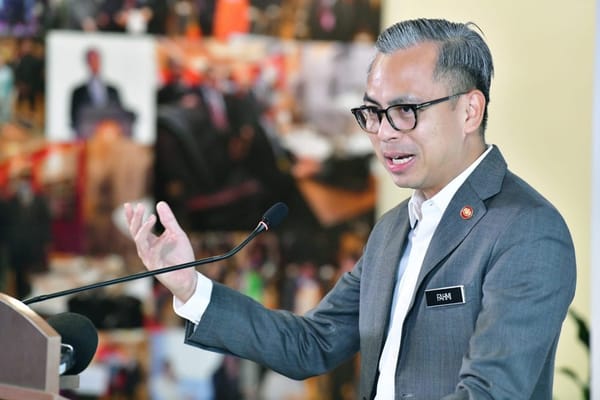
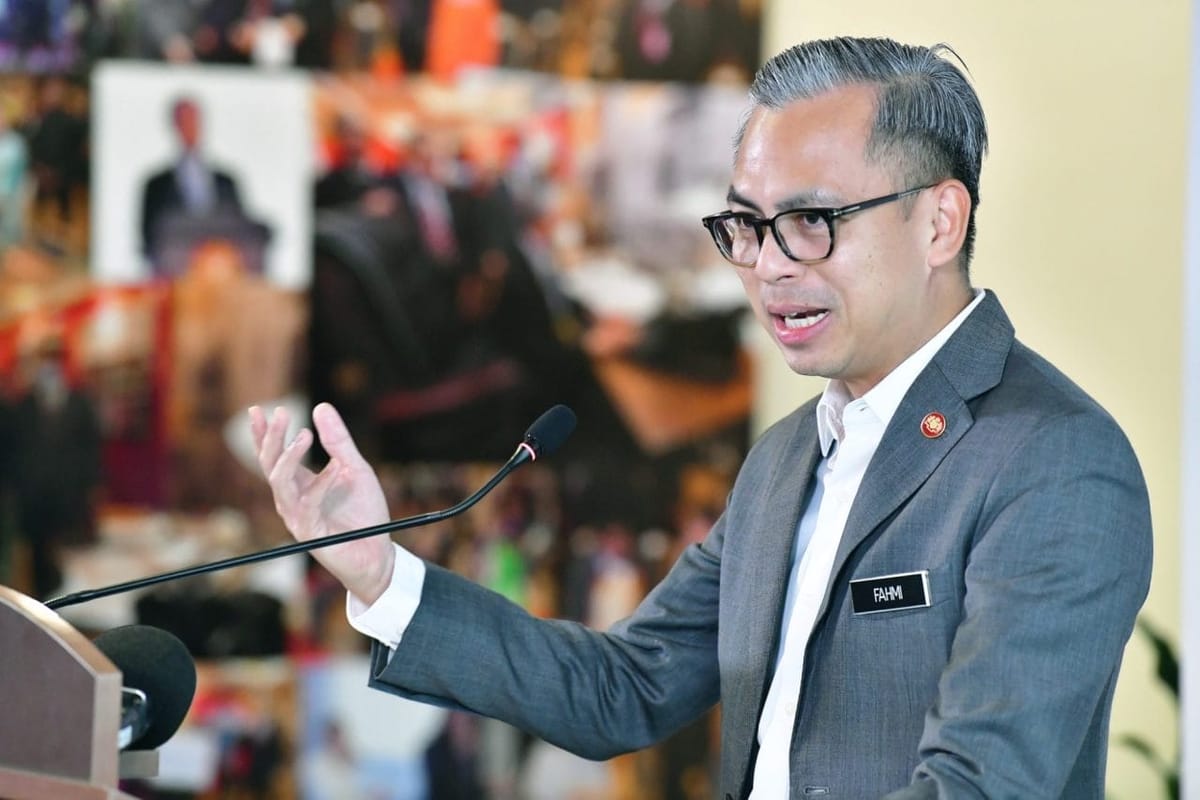
Recently, the public discourse regarding the government’s proposal—specifically the narrative driven by the Minister of Communications, Mr Fahmi Fadzil—to ban social media usage for those under 16 years old has become increasingly critical. The justification often revolves around safety: protecting the youth from sexual predators, cyberbullying, and negative influences.
However, as an IT student and a digital rights activist, I do not see this as a safety measure. I see it as a "shortcut" to mask a systemic failure in managing Malaysia's internet ecosystem.
Web 1.0 vs Web 2.0: Failing to Understand Digital Evolution
To understand why this proposed ban is problematic, we need to return to the fundamentals of internet technology that I learnt in my lectures.
The authorities seem to be stuck in a Web 1.0 mentality. Web 1.0 was the "read-only" era, where the internet functioned like a television or a newspaper—information was sent one-way from the provider to the user. If you didn't like what was on, you turned off the TV. Simple.
But we are now living in the era of Web 2.0 and moving towards Web 3.0. This is the "read-write" web. It is a two-way street. Social media is not just a place to watch dance videos; it is critical infrastructure for communication, collaboration, and identity building.
For teenagers aged 13 to 16 today, social media is where they:
- Build portfolios for art or coding.
- Learn about the outside world through educational content.
- Connect with niche communities that share their specific interests.
Cutting off this access via a "total ban" means we are severing their lifeline to learning and social development. We are forcing them to be passive consumers (Web 1.0) in a world that demands active interaction.
Blaming the Victim to Cover Systemic Potholes
The narrative often peddled is: "Social media is a dangerous place, so let’s not let the kids in."
This is a classic form of victim-blaming. If a road is dangerous because there are many drunk drivers and potholes, do we ban pedestrians from using the road? No. We catch the drunk drivers and we resurface the road.
In the context of the Malaysian cyber landscape, those "potholes" are systemic failures:
- Weak Enforcement: Why are sexual predators and scammers still roaming free on these platforms?
- Lack of Digital Literacy Education: Why do we prefer fear-mongering over teaching users how to identify danger?
- Fragile Data Sovereignty: Why is our personal data so easily leaked that scammers can contact us with ease?
The act of censoring an entire demographic (under-16s) is an easy way for the government to wash its hands of the problem. It gives the illusion that "something is being done," whilst the root causes—cybercrime and enforcement failure—remain completely untouched.
A Neurodiverse Perspective: The Internet as a Lifeline
One aspect often overlooked by policymakers is the neurodiverse community. As an autistic person, I understand that face-to-face communication can sometimes be incredibly draining and fraught with invisible social hurdles.
For many autistic teenagers, the internet and social media are spaces where the playing field is levelled. Here, we can communicate without the pressure of maintaining eye contact or decoding complex body language. We can find communities that accept us as we are.
Banning social media for this group is not just "reducing screen time"; it is a form of social isolation. It shuts the door on the only way some of us can comfortably interact with the outside world. Has Mr Fahmi considered this psychological impact, or is this decision made entirely based on a neurotypical framework?
The "Creep" Label and Ad Hominem Attacks
What is even more disheartening is that when we try to debate this issue rationally—discussing digital rights, freedom of speech, and system failures—we are often attacked personally.
I myself have been accused of various unsavoury titles, such as being a "creep," simply for defending a free internet. When intellectual arguments are met with moral accusations ("Do you not care about children?", "Are you some kind of predator?"), it signals the death of intellectual discourse.
We must stop using emotion to draft technical legislation. We need to look at data and reality. Criminals will not stop because of an age-limit law; they will find other ways. The only ones who will be affected are the law-abiding citizens.
What is the Real Solution?
We cannot go back to communicating via smoke signals. We need to move forward with Digital Sovereignty and Education.
- Empower Literacy, Not Censorship: Teach the youth (and parents!) about data privacy, how to identify grooming, and how to manage their digital footprint. Make it a compulsory subject in schools, not just a once-a-year talk.
- Safer Technology (Humane-Tech): Encourage the use of platforms that respect privacy and do not manipulate algorithms for addiction. As a proponent of self-hosting, I believe the future lies in decentralised platforms where communities can moderate each other, not in giant platforms that only care about profit.
- Platform Responsibility & Enforcement: Force giant tech platforms to cooperate with the police to catch the actual criminals, rather than just banning user accounts.
Conclusion
Banning social media for those under 16 might satisfy certain politicians who want a quick fix on paper. But in reality, it is a regressive step that will hinder the potential of our younger generation.
We should not sacrifice democracy and the voice of the rakyat simply to blindly copy what other countries are doing. Malaysia has the potential to build an internet model that is civilised, safe, and free—but it starts by admitting that the real problem lies with the system, not the users.
Do not switch off our youth's digital light just because we are too lazy to fix the switch.